
Few things signal the arrival of spring quite like flowers. Their return—whether in a simple bouquet or sprawling across a mountainside—marks the end of winter and the beginning of warmer days. And when it comes to breathtaking floral displays, Crested Butte, Colorado, stands in a league of its own.
Tucked high in the Colorado Rockies, Crested Butte is affectionately known as the “Wildflower Capital of Colorado.” Despite its small size, the mountain town is celebrated for its vibrant alpine blooms, which have earned international recognition. According to a recent ranking, Crested Butte’s wildflower fields are considered the most beautiful in the United States and rank second worldwide.
The study, conducted by PremierInn.com, used eye-tracking technology to analyze how long viewers naturally focused on images of flower fields from around the globe. The longer the gaze, the higher the ranking. Chile’s Daisy Flower Field in Torres del Paine National Park claimed the top spot, while images from the Crested Butte Wildflower Festival tied for second place alongside Monet’s famed garden in Giverny, France.
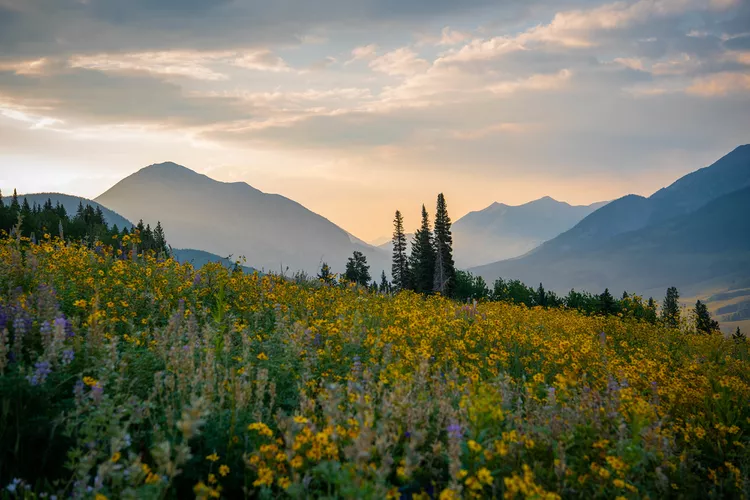
What sets Crested Butte apart is that its blooms are entirely wild and uncultivated. Flowers emerge across the landscape—from valley floors near town to alpine elevations reaching 11,000 feet. Against a backdrop of rugged Rocky Mountain peaks and shimmering aspen groves, visitors can spot everything from snow lilies and fairy slipper orchids to dwarf larkspur and Colorado blue columbines, the state flower.
Reaching these vibrant meadows often requires a hike into the high country, making the reward even more magical. For those wanting a deeper understanding of the region’s flora, the Crested Butte Wildflower Festival offers an immersive experience each summer. Running from July 12 to July 21, 2024, the 10-day event features guided hikes and more than 200 workshops, covering topics such as conservation, pollination, edible plants, photography, and botanical art.
In Crested Butte, the beauty of wildflowers isn’t confined to a single field—it’s woven into the very fabric of the landscape, inviting visitors to explore, learn, and marvel at nature in full bloom.